
Values
Why are values important for tackling complex societal and environmental problems?
The theory of basic human values is a theory of cross-cultural psychology and universal values developed by Shalom H. Schwartz. In our working experience we have found his work - and that of other social scientists - to be of real merit when considering how to frame environmental considerations in terms which can be best received by sectors of society that can have differing values.
The theory extends previous cross-cultural communication frameworks such as Hofstede's cultural dimensions theory. Schwartz identifies ten basic human values, distinguished by their underlying motivation or goals, and explains how people in all cultures recognize them. These values are likely to be universal because they help humans cope with one or more of the following three universal requirements of existence:
- needs of individuals as biological organisms
- requisites of coordinated social interaction
- survival and welfare needs of groups.
The following table describes the ten broad personal values and their defining goals:
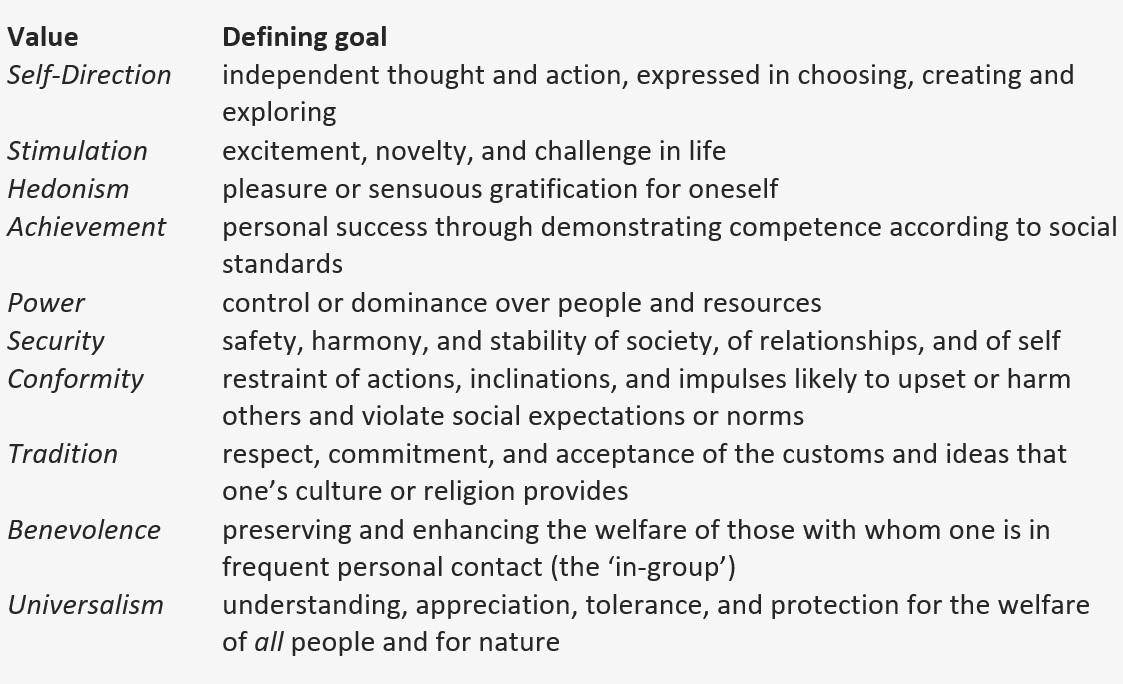
There are two major methods for measuring these ten basic values: the Schwartz Value Survey and the Portrait Values Questionnaire.
The Schwartz Value Survey (SVS) reports values of participants explicitly, by asking them to conduct a self-assessment. The survey entails 57 questions with two lists of value items. The Portrait Values Questionnaire (PVQ) has been developed as an alternative to the SVS. The PVQ has been created primarily for children from 11–14, however, it has also shown to produce coherent results when given to adults.
In value theory, individual values may align with, or conflict against one another, often visualised in a circular diagram where opposing poles indicate values that are in conflict.
An expanded framework of 19 distinct values was presented from Schwartz and colleagues in a 2012 publication, creating on the theory of basic values. These values are conceptualised as "guiding principles" that influence the behaviours and decisions of individuals or groups.
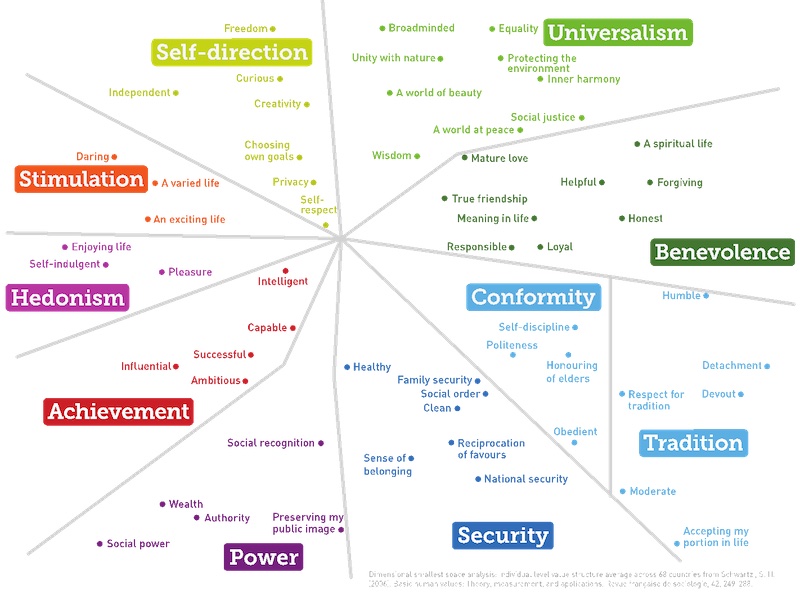
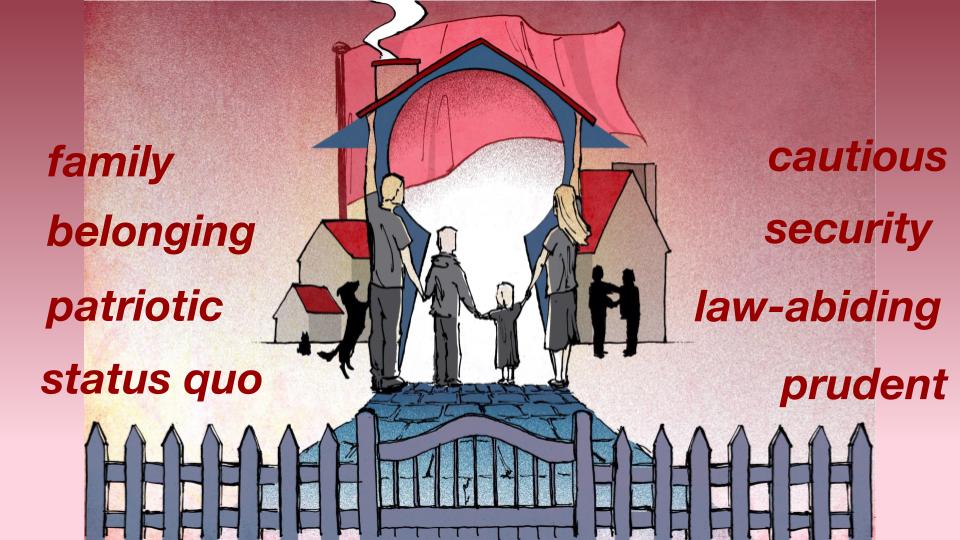
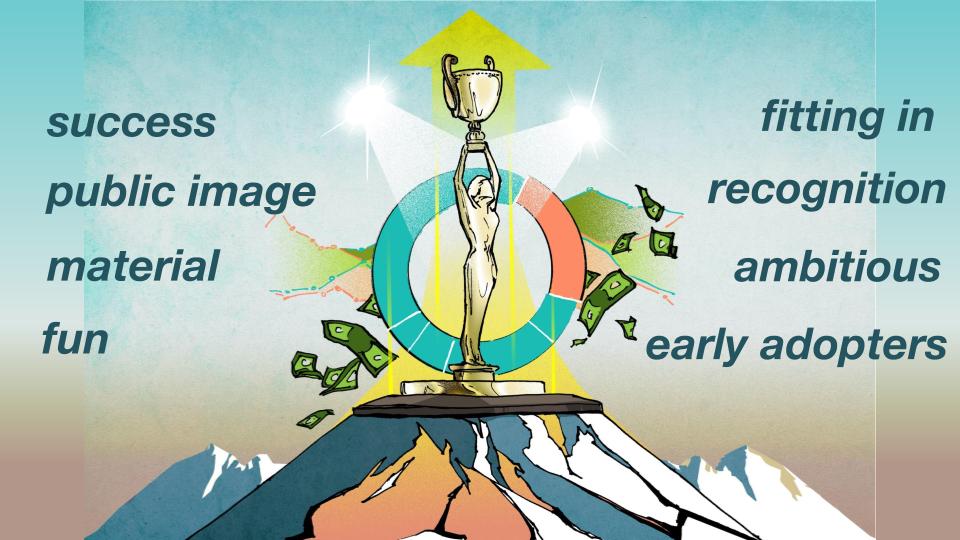
For our purposes, we will often abbreviate these groupings in order that clients, participants and organisations can develop initial thoughts about how they might communicate to, consult with, or present to broad categories.
We are happy to discuss more about our approach and how we can help you.